
Commercial Storm Damage in Asheville, NC
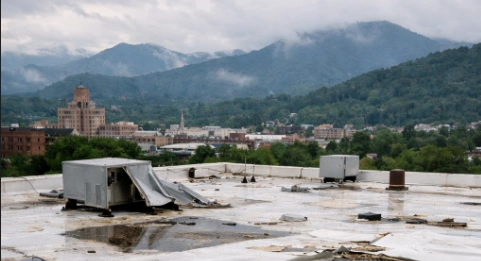
Commercial storm damage is one of the most costly and disruptive issues facing property owners in Asheville, NC. From intense mountain wind events to hailstorms, heavy rainfall, and remnants of tropical systems moving inland, Western North Carolina sees weather patterns that can quietly devastate commercial roofing systems.
For business owners, facility managers, and commercial property investors, understanding commercial storm damage is critical—not only for protecting assets, but also for avoiding insurance disputes, operational downtime, and long-term structural deterioration.
What Property Owners Need to Know
Commercial storm damage often starts small
—minor punctures, seam separation, or flashing damage can lead to major leaks if ignored.
Mountain weather amplifies risk
—minor punctures, seam separation, or flashing damage can lead to major leaks if ignored.
Insurance timelines matter
—Most commercial storm damage claims require prompt documentation and professional inspections.
Professional assessments protect your investment
—Certified commercial roof inspections strengthen insurance claims and prevent denied coverage.
Understanding Commercial Storm Damage in Western North Carolina
Commercial storm damage refers to any weather-related impact that compromises the integrity of a commercial roofing system, including membranes, metal panels, insulation, decking, and drainage components. In Asheville and Buncombe County, the most common causes of commercial storm damage include:
- High-wind events
- Hailstorms
- Prolonged heavy rainfall
- Snow and ice accumulation
- Tropical storm remnants
According to the National Weather Service, wind speeds in mountain regions can exceed those in surrounding valleys due to elevation and terrain funneling effects. This makes commercial buildings in Asheville particularly vulnerable to uplift and membrane stress during storms.
The National Oceanic and Atmospheric Administration (NOAA) reports that North Carolina averages over 40 severe thunderstorm events per year, many of which include damaging winds and hail—both primary contributors to commercial storm damage.
Asheville Businesses Trust Litespeed Construction
Commercial storm damage requires local expertise. Litespeed Construction brings:
- Commercial roofing specialization
- Insurance documentation support
- Emergency response capabilities
- Code-compliant repair solutions
Our team understands Asheville’s climate, building codes, and insurance expectations—ensuring commercial storm damage is addressed thoroughly and correctly. Call us at (828) 505-6051 for help navigating your options and find the best way to pay for your new roof.
Why Asheville Commercial Roofs Are Especially Vulnerable
Commercial storm damage is not evenly distributed across regions. Asheville’s unique geography introduces specific challenges:
Elevation and Wind Uplift
Buildings located on ridges or elevated commercial corridors experience higher wind pressures. The Federal Emergency Management Agency (FEMA) notes that uplift forces increase significantly on flat and low-slope roofs when wind flows over roof edges and parapet walls.
Driving Rainfall
Asheville averages over 47 inches of rainfall annually, according to NOAA climate data. When wind-driven rain accompanies storms, water intrusion often occurs through compromised seams, penetrations, and flashing—classic signs of commercial storm damage.
Temperature Swings
Lorem ipsum dolor sit amet, consectetur adipiscing elit. Ut elit tellus, luctus nec ullamcorper mattis, pulvinar dapibus leo.
Rapid temperature changes cause expansion and contraction in roofing materials. Over time, this weakens seams and fasteners, making roofs more susceptible to storm-related failure.
Common Types of Commercial Storm Damage
Wind Damage
High winds can:
- Lift and wrinkle TPO or EPDM membranes
- Loosen fasteners on metal roofing
- Tear edge details and coping caps
- Displace HVAC curb flashing
The Insurance Institute for Business & Home Safety (IBHS) identifies roof edges as the most failure-prone areas during wind events, making edge inspections critical after storms.
Hail Damage
Hail does not need to puncture a roof to cause commercial storm damage. The National Roofing Contractors Association (NRCA) explains that hail can:
- Fracture membrane layers
- Create micro-cracks in coatings
- Damage protective granules on modified bitumen roofs
Even cosmetic hail damage can accelerate roof aging and void manufacturer warranties.
Water Intrusion and Ponding
Storm-related drainage failures lead to standing water. According to FEMA, ponding water significantly increases roof load and accelerates membrane degradation—both indicators of severe commercial storm damage.
Signs of Commercial Storm Damage To Never Ignore
Commercial storm damage is often invisible from the ground. Warning signs include:
- Interior ceiling stains or bubbling paint
- Increased HVAC energy costs
- Mold or mildew odors
- Loose or missing flashing
- Standing water 48 hours after rainfall
The U.S. General Services Administration (GSA) reports that deferred roof maintenance is one of the leading causes of premature roof replacement in commercial buildings.
The True Cost of Ignoring Commercial Storm Damage
Ignoring commercial storm damage can be financially devastating. According to FEMA, water intrusion accounts for nearly 40% of commercial building losses following severe weather events.
Unchecked damage can lead to:
- Structural deck rot
- Electrical system exposure
- Inventory loss
- Tenant displacement
- Insurance claim denials
Early detection dramatically reduces repair costs and business interruption.
Commercial Storm Damage & Insurance Claims in North Carolina
Most commercial insurance policies cover storm-related roof damage, but documentation is key. The North Carolina Department of Insurance advises property owners to:
- Document damage immediately after storms
- Prevent further damage with temporary repairs
- Obtain professional inspection reports
- Avoid permanent repairs before claim approval
A professional roofing contractor experienced in commercial storm damage can identify hidden issues that adjusters may overlook.
Why Professional Inspections Matter After a Storm
Commercial storm damage is rarely straightforward. The NRCA emphasizes that only trained roofing professionals can accurately assess:
- Membrane elasticity loss
- Subsurface moisture infiltration
- Fastener pull-out
- Coating compromise
Infrared moisture scans, core sampling, and uplift resistance testing are tools used to validate commercial storm damage claims.
Schedule a Commercial Storm Damage Inspection Today
If your commercial property in the Asheville, NC greater area has experienced severe weather, do not wait. Commercial storm damage worsens over time and becomes more expensive to fix.
A professional inspection protects your building, your tenants, and your bottom line.
Contact Litespeed Construction now for a free consultation and let us help you find the best way to pay for your new roof. Call us or visit our website to schedule your appointment. Your future starts with a safe and durable roof—let’s make it happen together!